
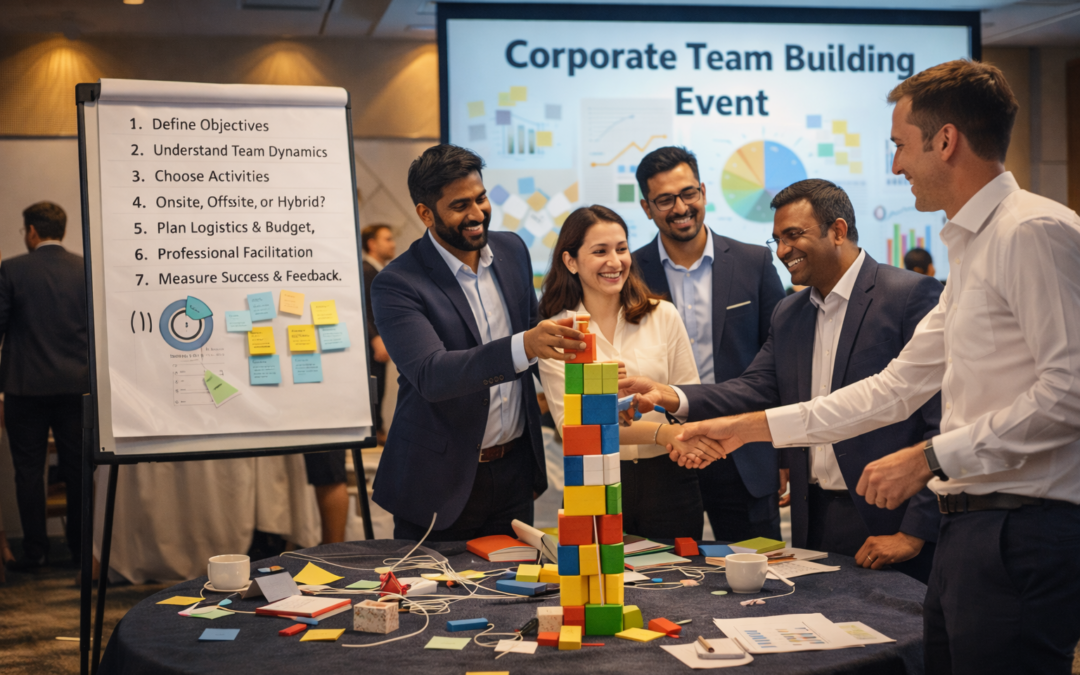
How to Plan a Successful Corporate Team Building Event (Step-by-Step Guide)
Planning a corporate team building event is more than just organizing a day of activities—it’s about creating meaningful experiences that improve collaboration, strengthen relationships, and drive real business outcomes. When done right, a well-structured team building program can significantly boost employee engagement, communication, and overall team performance.
Many organizations today are moving beyond casual outings and investing in professionally designed corporate team engagement solutions that align with their business goals and team dynamics.
Step 1: Define Clear Objectives
Before selecting activities or venues, it’s crucial to identify what you want to achieve. Without clear objectives, even the most engaging event may fail to deliver results.
- Improve communication and collaboration
- Boost employee morale and motivation
- Strengthen trust within teams
- Enhance leadership and problem-solving skills
Step 2: Understand Your Team Dynamics
Every team is different. Factors like team size, age group, work culture, and communication styles play a major role in determining the success of your event.
For example, high-energy outdoor challenges may work well for some teams, while others may benefit more from structured problem-solving or creative activities similar to those used in interactive team engagement formats.
Step 3: Choose the Right Type of Activities
Selecting the right activities is one of the most critical steps. The focus should be on aligning activities with your objectives rather than choosing what’s simply popular.
- Icebreakers: Ideal for new teams or large groups
- Problem-solving challenges: Improve collaboration and decision-making
- Adventure-based activities: Build trust and teamwork
- Creative workshops: Encourage innovation and communication
Many companies now prefer curated programs offered by experienced team building experts to ensure activities are impactful and aligned with business goals.
Step 4: Decide Between Onsite, Offsite, or Hybrid Formats
The format of your event plays a major role in engagement levels and outcomes.
- Onsite: Convenient and cost-effective for short sessions
- Offsite: Ideal for immersive experiences and deeper bonding
- Hybrid: Combines virtual and physical elements for flexibility
Destination-based programs, especially those organized in engaging environments, often deliver stronger results. Many organizations explore offsite team building experiences to create more impactful and memorable outcomes.
Step 5: Plan Logistics and Budget Efficiently
A successful event requires seamless execution. Proper planning ensures that everything runs smoothly without unnecessary stress or last-minute issues.
- Set a realistic budget
- Choose a suitable venue or platform
- Arrange transportation and accommodation (if required)
- Ensure all technical and operational requirements are covered
Step 6: Focus on Professional Facilitation
One of the most overlooked aspects of team building is facilitation. Even the best activities can fail without proper guidance and engagement.
Experienced facilitators ensure participation, maintain energy levels, and connect activities to real workplace outcomes. This is why many businesses rely on structured corporate team building programs that include expert-led execution.
Step 7: Measure Success and Gather Feedback
To understand the true impact of your event, it’s important to evaluate outcomes and gather feedback from participants.
- Conduct post-event surveys
- Analyze team performance improvements
- Identify areas for future enhancement
Common Mistakes to Avoid
- Choosing activities without clear objectives
- Ignoring team preferences and dynamics
- Lack of proper planning and coordination
- Not investing in professional facilitation
Final Thoughts
A successful corporate team building event is a blend of strategy, planning, and execution. It’s not just about bringing people together—it’s about creating experiences that drive collaboration, trust, and long-term performance.
Organizations that invest in well-designed team building initiatives consistently see better engagement, stronger team dynamics, and improved workplace culture. The key lies in choosing the right approach and ensuring every element is aligned with your business goals.